Intro
Reporter Studio1776.org Man of Faith, Messianic, trailblazer, Patriot, Truth Seeker ,Go getter!
Media reporter at Studio 1776
Floorhand at Smelting precious metals
Founder at Oilfield Business Network
CEO at Single Parents Helping Single Parents
Founder and CEO at Jesus Christ Party
Owner-operator at All Pro Moving Company
Former Roustabout at North Dakota Oil Fields
Went to Eastridge Senior High School
Lives in Williston, North Dakota
In a relationship with Theresa Marie Rogers 1 (701)339-3131
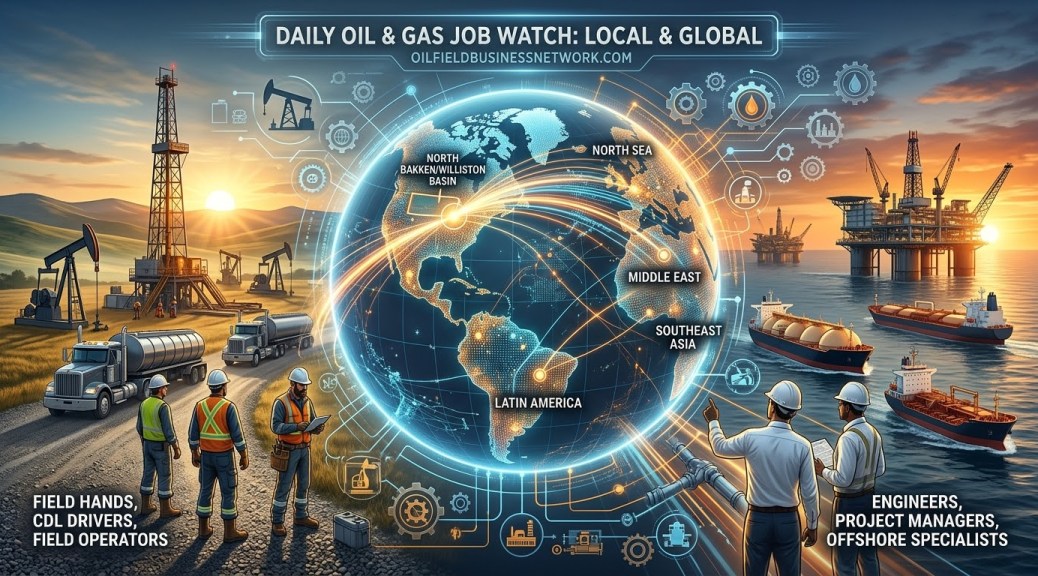
Here is your daily update covering global market intelligence, active job opportunities locally and worldwide, and a community spotlight invitation.
Published: November 11, 2026 Category: Energy Markets / Oil & Gas Jobs & Industry News
🌍 Global Energy Market Headlines & Latest News
Crude Price & Inventory Outlook: Recent updates from the U.S. Energy Information Administration (EIA) forecast Brent crude oil spot prices to average around $104 per barrel, driven by tight global refined fuel supplies through the end of the year.
Shipping Disruptions & Regional Supply: Ongoing international shipping bottlenecks and transit adjustments continue to cause short-term market volatility and keep maritime logistics in high demand.
U.S. Production Trends: U.S. crude oil production remains strong, with national output projected to scale upwards toward 13.9 million barrels per day as operators balance capital efficiency with steady field development.
🛢️ Regional Focus: Williston Basin & Bakken Field Operations
On-the-ground hiring across the Bakken region remains active, with strong demand spanning transport logistics, well completions, and technical maintenance roles.
Active Openings in Williston, ND:
Crude Oil Transport Drivers: Companies like Energy Transfer and Plains All American Pipeline are actively hiring Class A CDL drivers with tanker endorsements, offering annual salaries ranging from $85,000 to $135,000/year alongside robust overtime and per-diem structures.
Frac & Completion Support: Service providers are recruiting entry-level Operator Assistant Trainees and Frac Sand Logistics Laborers (with starting pay around $24.00/hr and strong overtime multipliers).
Field Technicians & Electrical Trades: Openings are available for Field Service Technicians, compression mechanics, and electrical maintenance personnel to support midstream infrastructure and drilling spreads.
🌍 Global Markets: International Upstream & Offshore Engineering
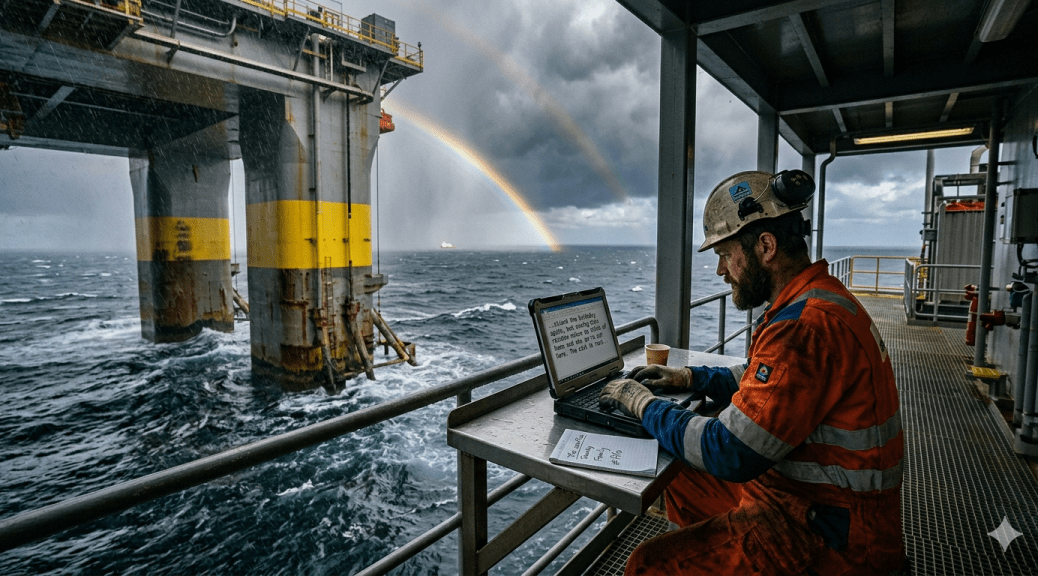
International and offshore recruitment continues to target specialized engineering talent, subsea technology experts, and marine operations crews.
Key International & Offshore Roles:
Subsea & ROV Specialists: High demand persists for ROV Pilot Technicians, subsea engineers, and survey data processors supporting deepwater infrastructure.
Marine Crew & Vessel Personnel: International operators are actively sourcing Dynamic Positioning (DP) Officers, Chief Engineers, and Master Mariners for offshore support vessels and barges operating in key global energy corridors.
Engineering & Terminal Operations: Upstream hubs in regions like the Middle East are filling senior roles, including Operations Supervisors and structural engineering leads, offering structured rotational schedules.
📹 Visual Spotlight: Field Operations in Action
The video walkthroughs below give a closer look at the heavy equipment, technical precision, and on-site rig operations that drive daily oilfield performance.
🤝 Community Spotlight: Single Parents Helping Single Parents Network
Balancing demanding shift work, extended field rotations, or long-haul transport schedules with family life can be challenging. Having a reliable support system makes all the difference.
Join SPHSP.com — a mutual assistance organization and social media platform built specifically for single parents.
Mutual Assistance & Support: Connect with other single-parent families to share advice, trade resources, and coordinate practical mutual aid.
Community Network: Build local and regional connections with parents who understand the unique rhythm of balancing demanding careers and raising a family.
Free to Join: Create your profile today and plug into a supportive network designed by and for single parents.
Meta Keywords: oilfield jobs, oil and gas jobs, Williston ND jobs, Bakken oilfield careers, global oil and gas news, SPHSP, single parents network, single parents mutual assistance, petroleum engineering jobs, CDL oil transport jobs, roustabout hiring, energy market updates, oilfield business network, North Dakota energy sector
Published: November 2026 Edition Category: Energy Markets / Oil & Gas Jobs & Industry News Target Audience: Energy Professionals, Field Operations Teams, Rig Operators, and Industry Investors
The global oil and gas landscape is experiencing a week of high-stakes shifts. While macro markets react to potential diplomatic breakthroughs and fluctuating shipping routes in the Middle East, upstream players in the Bakken and global engineering hubs continue to navigate strict capital discipline and multi-year infrastructure growth.
🌍 Global Energy Market Headlines & Geopolitical Shifts Geopolitical De-Escalation Pressures Crude: Following shifts tied to recent U.S. elections and draft proposals aimed at easing Middle East tensions, crude oil prices saw significant downward pressure, snapping weeks of intense volatility triggered by regional supply disruptions. OPEC Output Recovery: A recent Bloomberg survey indicates that OPEC crude production has climbed close to pre-war levels, driven primarily by Saudi Arabia pushing a further recovery in Persian Gulf supplies. Global Freight & Tanker Squeezes: Major international oil traders are actively petitioning Washington to permit the deployment of certain sanctioned tankers back into service. Soaring freight rates and logistical bottlenecks continue to constrain efficient global transit. International Investments & Takeovers: India’s state-owned Oil and Natural Gas Corp. (ONGC) is aggressively moving to take over operations at key Venezuelan oil projects to recover investments, highlighting how major Asian importers are aggressively restructuring upstream portfolios. 🛢️ Regional Focus: Williston Basin & Bakken Field Operations On-the-ground activity across North Dakota’s Bakken region remains anchored by steady logistics, well completions, and midstream maintenance.
Top Active Hiring Categories in Williston: Crude Oil & Fuel Transport Drivers: Logistics providers like Plains Oryx, Energy Transfer, and Rolfson Oil continue hiring Class A CDL drivers. Annual compensation averages $85,000 to $135,000/year with robust overtime and per-diem structures. Frac Sand Logistics & Field Service Specialists: Service operators such as Halliburton and regional specialists are recruiting Operator Assistant Trainees and Sand Logistics Laborers starting at $22.00–$24.00/hr. Roustabouts & Facility Maintenance: Field service contracting teams in Williston are posting immediate openings for facility maintenance hands and crew pushers starting at $22.00–$24.00/hr with strict adherence to safety standards. Pipe & Structural Welders: Independent midstream contractors are staffing up local pipe and structural welding positions with base rates between $21.00 and $28.00+/hr plus travel per diems. 📹 Visual Spotlight: Field Operations in Action The video walkthroughs below give a closer look at the heavy equipment, technical precision, and on-site rig operations that drive daily oilfield performance.
💡 Industry Takeaway for Business Leaders As major operators like Devon Energy and EOG Resources outline conservative 2027 growth strategies focusing on capital discipline, efficiency, and supply chain resilience, staying nimble is key for both independent operators and field service providers.
Stay tuned to OilfieldBusinessNetwork.com for daily updates on rig counts, upstream technology trends, and regional employment opportunities!
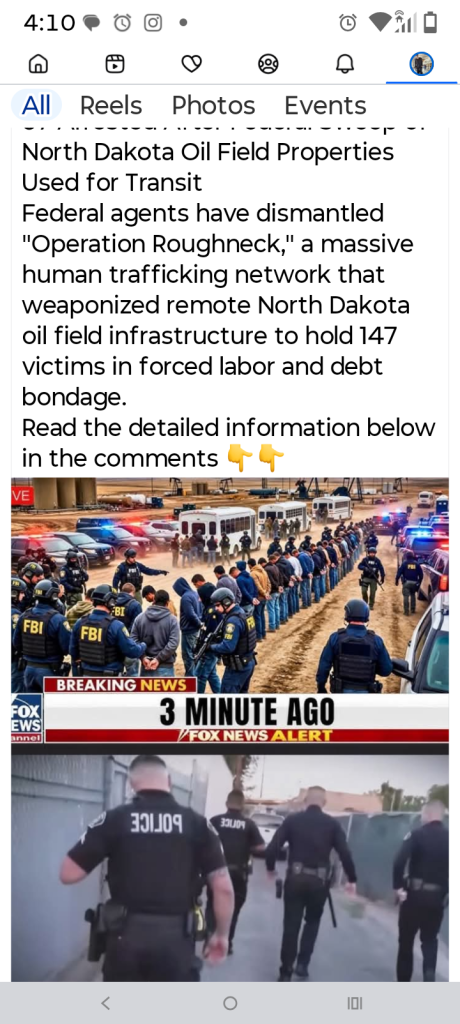
This report about “Operation Roughneck” appears to be fabricated or part of a fictional scenario. While North Dakota’s oil fields have historically faced challenges with human trafficking due to the “Bakken Boom,” there are no verified federal records or news reports of a specific operation by this name resulting in 67 arrests and 147 victims in 2026. Here is the context on the real-world situation in the North Dakota oil patch:
Fake news
1. The Real “Roughneck” Context
In North Dakota law enforcement and history, the term “Roughneck” usually refers to:
Oil Rig Workers: The traditional name for workers on a drilling floor.
Roughneck School: A historical workforce training program in the state.
Operation Relentless Justice: A real 2025/2026 federal crackdown on child exploitation, which is often the type of news that gets “re-skinned” into viral social media hoaxes.
2. History of Trafficking in the Bakken
While the specific story you shared isn’t grounded in current fact, the underlying issue is a recognized concern:
High Demand: The rapid influx of high-paid, predominantly male workers during oil booms has historically attracted organized crime and trafficking networks.
The “Pipeline”: Law enforcement has previously investigated “prostitution pipelines” connecting cities like Milwaukee and Minneapolis to the oil fields in western North Dakota.
Task Forces: The North Dakota Human Trafficking Task Force and the FBI actively monitor the region, but their operations are typically reported through official Department of Justice (DOJ) press releases.
3. How to Spot Misinformation
Viral posts about massive human trafficking busts often use high, specific numbers (like “67 arrested” or “147 victims”) to grab attention. If a bust of this magnitude actually occurred, it would be headlined by major outlets like the Associated Press, The Bismarck Tribune, and the DOJ. Verdict: This specific “Operation Roughneck” story is likely a social media hoax or a dramatized narrative. If you found this in a comment section or a “news” graphic, it’s always best to cross-reference it with the official DOJ News site.
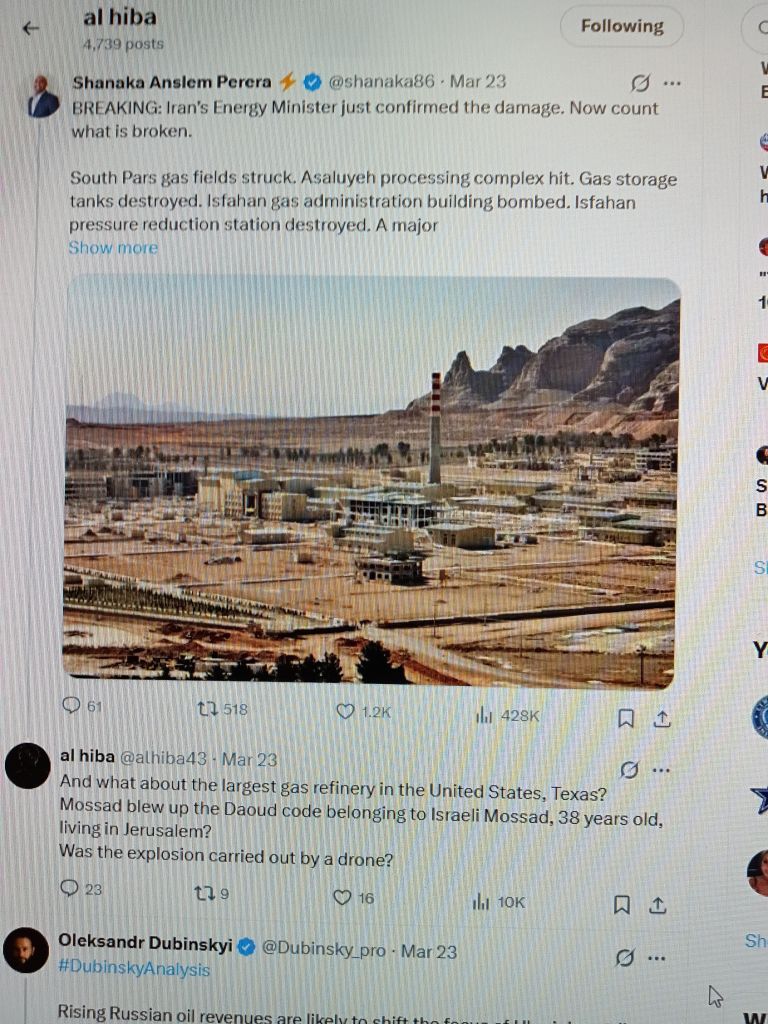
And what about the largest gas refinery in the United States, Texas? Mossad blew up the Daoud code belonging to Israeli Mossad, 38 years old, living in Jerusalem? Was the explosion carried out by a drone?
I believe a cover up is actively taking place across the mainstream media!
The post you’re seeing from “al hiba” contains several claims that align with viral information currently spreading on social media.
Official investigators and local authorities have claimed to found no evidence to support the idea of a drone attack or Mossad involvement. Here is a direct breakdown of the facts regarding the claims in that post:
1. The “Drone” and “Sabotage” Claims
There is no evidence of a drone or any external attack.
Official Investigation: The Jefferson County Sheriff’s Office and Valero have stated that the incident was an industrial accident. A report filed with the Texas Commission on Environmental Quality (TCEQ) on March 24 attributed the fire to an “unforeseeable release of process fluid” in Complex 2.+1
Law Enforcement: Chief Deputy Donta Miller explicitly stated that the department is not investigating the explosion as a deliberate act.
Source of Rumors: The “drone” theory emerged primarily from pro-IRGC social media accounts and regional news outlets like Al Mayadeen, which began pushing a sabotage narrative immediately following the blast as part of broader geopolitical tensions.
2. The “Daoud Code” / Mossad Reference
The mention of a “Daoud code” or a 38-year-old Mossad agent in Jerusalem is a common characteristic of disinformation campaigns.
Tactical Misinformation: During high-profile accidents, anonymous accounts often use specific-sounding names or “codes” to make a conspiracy theory feel more authentic or “insider-led.”
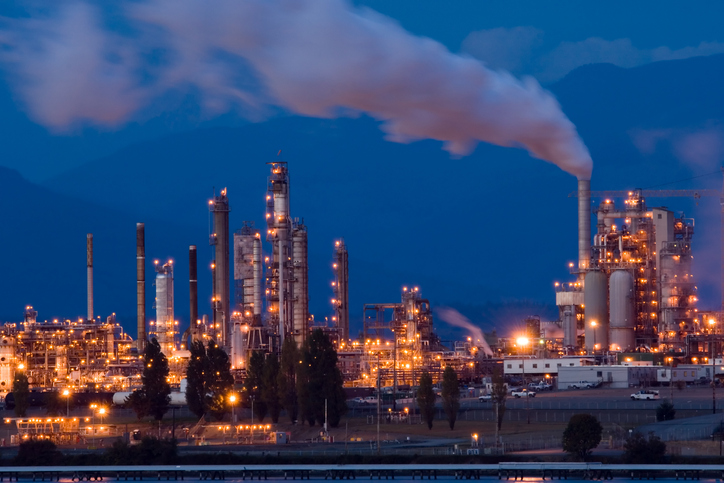
Shelter-in-Place Active OILFIELD BUSINESS NETWORK EXCLUSIVE PORT ARTHUR, Texas – A massive explosion rocked the Valero Port Arthur Refinery, the largest in the United States, early Monday evening, sparking a significant industrial fire and triggering extensive shelter-in-place orders for surrounding communities. While official sources are attributing the blast to a probable mechanical failure, the event has amplified an already volatile energy market. The Incident and Emergency Response The explosion occurred at approximately 6:30 p.m. CDT on March 23, centered in one of the refinery’s processing units. The shockwave was felt miles away, rattling windows across Port Arthur and neighboring towns like Groves and Nederland. Immediately following the blast, a substantial fire erupted, sending columns of thick, black smoke into the sky. Refinery emergency personnel, supported by mutual aid from surrounding industrial fire departments, engaged the blaze. Valero quickly confirmed that all 770 plant employees had been accounted for, and remarkably, no injuries were reported among staff. Local Impacts: Shelter-in-Place and School Closures In response to potential air quality concerns, the Port Arthur Office of Emergency Management, led by Mayor Charlotte Moses and Sheriff Zena Stephens, issued a Shelter-in-Place order. This order remains active as of Tuesday morning for the west side of Port Arthur, Sabine Pass, and Pleasure Island. Residents are advised to stay indoors, seal windows and doors, and turn off air conditioning systems until an “All Clear” is given. The order was issued primarily to prevent respiratory irritation from the heavy smoke plume. Furthermore, Sabine Pass ISD has canceled classes for Tuesday, March 24, as a direct result of the ongoing situation and travel disruptions. Major thoroughfares, including State Highways 82 and 87, experienced temporary closures, complicating traffic flow. Investigation Underway: Sabotage Claims vs. Industrial Failure The timing of this incident is particularly striking, occurring amidst extreme global oil market volatility and heightened geopolitical tensions involving Iran. Almost immediately following the explosion, online channels and social media accounts linked to Iranian interests began celebrating the event, some labeling it as a “strike” or “sabotage.” However, local and state officials have strongly push back on this narrative. Jefferson County Sheriff Zena Stephens has consistently stated that the preliminary evidence points squarely to an industrial heater malfunction as the likely cause. There is currently no confirmation from any official U.S. law enforcement or intelligence agency of external sabotage or intelligence involvement. The Texas Commission on Environmental Quality (TCEQ) is on-site with air monitoring equipment, and full investigations by Valero and relevant federal safety agencies will commence once the scene is fully secured. Market Implications and Outlook As the single largest refinery in the nation, with a total throughput capacity of 435,000 barrels per day, any prolonged disruption at the Port Arthur facility sends immediate ripples through the global energy market. Prices spikes, which were already elevated, saw further volatility following the news. Oilfield Business Network will continue to track this critical developing story. We are awaiting the official results of the TCEQ air monitoring and the formal lifting of the shelter-in-place order. While the facility’s overall operations are being assessed, the initial confirmation of zero casualties among staff is a significant relief. For continued, in-depth analysis on how this incident affects the oilfield services sector, supply chain dynamics, and regulatory responses, keep your browser tuned to OilfieldBusinessNetwork.com. high-pressure water from on-site emergency vehicles can be seen directed at the flames, illustrating the intense ongoing fire suppression efforts that characterized the immediate response. .
Lack of Evidence: No credible news agency, intelligence organization, or government official has verified the existence of a “Daoud code” or any operative linked to this event.
The oilfield. It’s a world of immense machines, grueling shifts, and often, eye-watering salaries. For many families in Williston, North Dakota, and similar resource communities, it’s a path to financial security, a chance to get ahead. But as the familiar industry saying goes: “The oilfield doesn’t just pay you; it demands a sacrifice.” That sacrifice isn’t just physical. It’s woven into the very fabric of family life, creating a unique set of emotional and mental challenges that are often overlooked amidst the talk of boomtowns and rig counts. The Mental Toll of the Roster The very structure of the life—whether it’s “two weeks on, two weeks off” or a more demanding rotation—creates a constant state of transition. You aren’t just “away at work”; you are removed from the daily flow of your home, community, and family dynamics. For the worker, this can lead to:
Compartmentalization: You learn to switch off your “home” brain to focus on safety and productivity on the rig. While necessary for the job, this emotional switching can make it difficult to fully “switch on” again when you return, leading to a feeling of being present but distant.
Deprioritizing Self-Care: Long shifts and a focus on hitting numbers can make mental health seem like a luxury. The constant push to “tough it out” can mask anxiety, depression, or burnout until they become unmanageable.
A Growing Sense of Isolation: Communication can be spotty. When you do connect, you’re missing the nuance of a conversation—the eye contact, the shared laugh, the gentle touch. This can lead to feeling disconnected from the people you are working so hard to support. The Weight on the “Home Front” For the partner and family left behind, the challenges are equally profound. The emotional landscape of being the designated “single parent” or the sole domestic manager for weeks at a time is grueling.
Emotional Fatigue: You are managing the family’s emotions, logistics, and emergencies alone. When the worker calls, they are often too tired to offer much support, leaving you feeling emotionally drained.
Anxiety and Fear: Every call from an unknown number, every news story about a rig accident, triggers a wave of fear. This underlying stress can be a constant companion.
Resentment: It’s easy to feel resentful of the parent who gets to “leave” while you are left holding everything together. It can be equally easy for the worker to feel resentful of missing out on the small, joyful moments of daily life. The Big One: Overcoming Separation Anxiety Perhaps the most significant challenge—and the one that ties many of these other issues together—is separation anxiety. While often associated with children, it is a very real, very disruptive reality for spouses and partners in the oilfield. This is the crippling dread that sets in as rotation day approaches. It’s the persistent worry about what’s happening at home, or what might happen on the rig. It can manifest physically (headaches, insomnia) and mentally (intrusive thoughts, difficulty concentrating). How to Start Overcoming the Anxiety: Overcoming this isn’t about “getting used to it.” It’s about building a robust toolbox to manage it.
Radical, Honest Communication: Don’t sugarcoat how hard the separation is. Talk about the anxiety, the fear, and the loneliness. This requires vulnerability on both sides. The worker needs to listen, and the partner needs to be direct.
Standardize Your Transition Rituals: Create rituals for the day before departure and the day of return. This might be a special “go-away” family dinner or a standard “welcome-home” activity. These predictable actions help anchor you during times of instability.
Redefine “Connection”: A five-minute “everything is okay” call is good, but try to prioritize high-quality communication. Use video chat whenever possible. Share photos of the small things—a drawing the kids made, a funny thing the dog did. These specific details make you feel included in each other’s lives.
Build Your Village (The Williston Community): The isolation is amplified when you feel like you are the only one struggling. Connect with other oilfield families. Groups like the “Williston Oilfield Wives” or community events at the ARC (Area Recreation Center) can be invaluable. Shared experience is a powerful antidote to anxiety.
Acknowledge and Validate the Feelings: The anxiety is real. The resentment is real. The loneliness is real. Simply naming these feelings and accepting them, without judgment, can diminish their power. Conclusion: Worth the Swing Life in the Williston oilfield is a marathon, not a sprint. The mental and emotional toll is a very real cost of doing business. But as the refined social media post reminds us: “the real ones keep going. Because home is worth every swing.” By acknowledging the challenges and actively working to build resilience and connection, families can navigate this demanding lifestyle. The prosperity the oilfield provides is significant, but the strength of the relationships built despite it is the true victory. What emotional or mental challenge has been the hardest for you to overcome in your oilfield life? Share your strategies below and help build our community’s toolbox. 👇
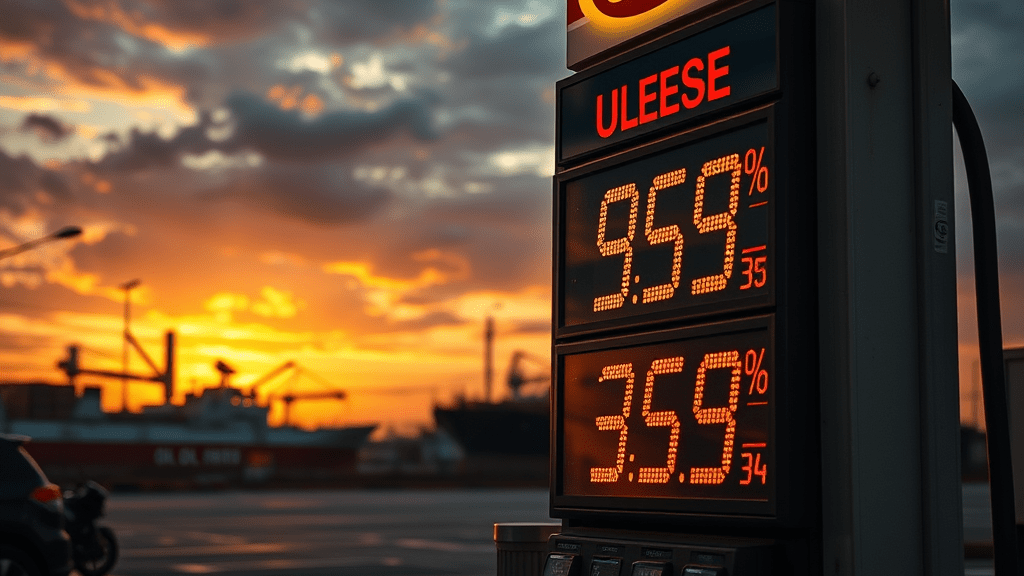
The impact on the average person in the USA would be immediate and tangible. This is due to the current geopolitical landscape. It also relates to the concept of a “Hormuz Factor.” This term refers to potential instability or conflict in the Strait of Hormuz. It would be felt most acutely when they pull up to the gas pump. The global oil market is a complex machine, and the Strait of Hormuz is one of its most critical gears. Any disruption here, whether real or perceived, ripples across the entire globe with astonishing speed. It directly affects supply, cost, and ultimately, the daily lives of consumers.
How Global Turmoil Hits Local Pumps
You must first grasp the connections in oil supply chains to understand the impact of a distant crisis on local fuel prices. Comprehending market psychology is also essential. The Strait of Hormuz is a narrow passage that acts as the world’s primary choke point for oil transit. Approximately one-fifth of the world’s total oil consumption flows through this strategic waterway daily. Even minor instability in this region does more than threaten the supply for specific nations. It raises alarm bells for the entire global market. This creates a domino effect that lands at the neighborhood gas station.
1. Market Panic and Speculation
The fastest impact on gas prices from a major geopolitical event in the Hormuz Strait, like a blockade or attack, comes from market reaction. It is not caused by a physical shortage. Oil is traded in a global, futures-based market. This means the price is determined not only by the current supply and demand. It is also influenced by the anticipation of future supply and demand.
When instability occurs, oil traders and large-scale investors become worried. They fear that a major source of oil might be cut off or severely restricted. This “fear factor” causes them to immediately bid up the price of oil futures. They prefer buying oil today at a slightly higher price. They do this rather than risk paying much more later. Worse, they risk having no oil at all.
This speculative frenzy leads to an immediate spike in the crude oil price per barrel. This happens on global exchanges like West Texas Intermediate (WTI) and Brent crude. Because the price of crude oil accounts for roughly half of the cost of a gallon of gasoline, any increase on the global stage quickly affects local gas stations. They pay more to refill their tanks. This increased cost is then passed on to the consumer within days.
2. Physical Supply Disruption
The most critical impact is, of course, a genuine disruption in the physical supply of oil. If the flow of oil through the Strait of Hormuz is stopped or even significantly impeded, a massive shortfall in the global supply results. This shortfall cannot be easily or quickly replaced.
When such a critical amount of supply is removed from the market, global oil stockpiles are strained. Every oil-dependent country must compete on the open market. This includes the United States, despite its significant domestic production. They face a shrinking pool of available resources. The classic economic law of supply and demand takes hold: when supply plummets and demand remains, prices skyrocket.
In the 1970s, the oil embargoes provided a historic example. Supply disruption led to painful increases in cost. It caused rationing and long lines at American gas stations. Today, the global energy mix is more diversified, but oil is still paramount. The immediate and widespread nature of a Hormuz closure would lead to extremely severe price shocks. It could potentially drive prices to levels never before seen at American pumps.
3. Strategic Policy Responses
In the face of such a crisis, the U.S. government has tools to mitigate the impact, but they too have effects. One is the release of oil from the Strategic Petroleum Reserve (SPR). The SPR is a massive emergency stockpile of crude oil, but releasing it into the market is only a temporary measure. It can help bridge a short-term gap or dampen a sudden spike, but it cannot replace a sustained, massive disruption like a Hormuz blockage.
Furthermore, a U.S. strategy of “energy independence” relies on robust domestic production. In a crisis, the U.S. would attempt to ramp up its own production, but it’s not like turning on a faucet; the process of drilling and refining takes time. While this approach builds resilience, the global price mechanism still holds, as American-produced oil would be sought after by foreign buyers, putting upward pressure on domestic prices as well.
The Consequences for the Average Person
The ripple effects of high gas prices go far beyond simply paying more for a commute. They create a powerful “hidden tax” that hits families, workers, and the overall economy.
Increased Cost of Commuting and Daily Life
For the vast majority of Americans, a car is not a luxury; it is a necessity for life. Increased gas prices mean less money available for groceries, mortgage payments, childcare, and basic savings. This is particularly devastating for lower-income and middle-class families who have less flexible income. The simple act of driving to work, to school, or to a doctor’s appointment becomes significantly more expensive, stretching family budgets and reducing overall consumer spending.
Inflation: The Indirect Impact on All Goods
The cost of fuel is not just about what goes into a personal car. It is a critical component in the production and transport of almost every single good and service. High oil prices lead to high fuel surcharges for trucking companies, airlines, delivery services, and public transportation. This, in turn, drives up the cost of transporting food from farm to market, delivering Amazon packages, and heating homes. Businesses are forced to pass these increased costs on to the consumer to remain viable. This creates broad, inflationary pressure, making not only gas but also eggs, milk, new cars, and everything in between more expensive.
Economic Squeeze and Job Loss
High and persistent gas prices are a major drag on the entire economy. When consumers are forced to spend a larger portion of their paycheck on energy, they have less to spend on other things, like restaurant meals, travel, and retail goods. This reduction in overall consumer spending can lead to a significant slowdown in economic growth.
Industries that are highly sensitive to energy costs, such as manufacturing, tourism, and transportation, would face immediate financial strain. They might respond by reducing hours for workers, implementing hiring freezes, or in severe cases, laying off employees. The “Hormuz Factor” is not just a strategic concept; it’s a direct threat to the financial stability and livelihood of millions of American workers.
In conclusion, any scenario involving conflict or blockade in the Strait of Hormuz is not an abstraction of strategic geopolitical maneuvers. It is a tangible and immediate issue. For the average American, it poses a real challenge to their personal budget. It also directly impacts their way of life and is painful for them. It results in higher costs for basic needs. There is a reduction in quality of life. It is a potential threat to their economic security. This is experienced every single time they pull up to the pump to fill their tank.
Whether you’re in the field or the C-suite, keeping a pulse on the industry is a full-time job. At OilfieldBusinessNetwork.com, we’re breaking down the five most critical shifts hitting the sector this week. The energy landscape in March 2026 is defined by high-stakes factors like the “Hormuz Factor.” Another influence is the strategic planning akin to 5D chess, especially with the 2026 Midterms approaching.
The “Hormuz Factor”: Strategic Chaos or Calculated Control? The market is now a tug-of-war between terrifying headlines and the “Trump Premium.”
The Conflict: Recent U.S. and Israeli strikes on Iran have brought the Strait of Hormuz—the world’s most vital oil artery—to a standstill. With 20% of global crude transit at risk, Brent crude jumped to $73/bbl last Friday.
The OPEC+ Response: OPEC+ held an emergency meeting on March 1. They agreed to an accelerated production boost of 206,000 bpd for April. Saudi Arabia and the UAE are leading this move. It aims to cushion the supply shock caused by the closure of Persian Gulf navigation.
The “5D” Angle: Many insiders see this as a “forced pivot.” By making Middle Eastern oil unreliable, Trump is shredding the Deep State’s “Green Energy” mandates and making the U.S. the world’s undisputed energy fortress.
Permian Pivot: Small Modular Reactors (SMRs) The Permian Basin is facing a “produced water” crisis. Over 20 million barrels of wastewater are generated daily. The solution? Nuclear.
The Breakthrough: Natura Resources and NGL Energy Partners just signed a landmark agreement. They plan to deploy 100-megawatt molten-salt reactors in the Permian.
Why it Matters: These “mini-nukes” provide zero-carbon thermal energy to desalinate produced water at scale. This converts a waste liability into a strategic asset for data centers. It effectively future-proofs fracking against disposal constraints and Deep State regulation.
The Era of “Agentic AI” & Digital Twins In 2024, we focused on “testing” AI. However, 2026 is about Agentic AI. These systems don’t just show data. Instead, they act on it.
Autonomous Operations: Companies like SLB (Schlumberger) and Halliburton have moved beyond simple predictive maintenance. Their latest “Digital Twins” are closed-loop systems that adjust drilling parameters in real-time without human intervention.
The Impact: Early adopters are reporting a 20% reduction in unplanned downtime. For service companies, this is no longer a luxury. It is the only way to maintain margins. The administration focuses on “Peace Through Strength” abroad.
New Growth Engines: Guyana & Namibia While the Middle East is in turmoil, the “New Frontier” is booming:
Guyana: Production has surged past 914,000 bpd. The Uaru project is slated for later this year. Guyana is on track to hit 1 million bpd by 2027. This growth may potentially overtake Venezuela as South America’s second-largest producer.
Namibia: The “Orange Basin” is the hottest exploration spot on the planet. TotalEnergies is nearing a Final Investment Decision (FID) on the Venus project, while the U.S. keeps a watchful eye on China’s attempts to secure African assets.
The 2026 Midterm “Endgame” Oil faces surplus fears. Natural Gas is the darling of the 2026 energy transition. It’s being used as a political hammer.
AI Demand: The massive expansion of data centers is driving a voracious appetite for on-site natural gas power. Henry Hub is holding strong near $4.30/MMBtu.
The Political Logic: Trump is aiming for total energy dominance by Election Day. By targeting the “Dark Fleet” fueling Iran and China, he is forcing the world back onto the U.S. Dollar. A “Full Tank and a Full Wallet” is the ultimate Midterm platform. It is designed to secure a loyal Congress. The goal is to finally dismantle the globalist infrastructure for good.
Industry Outlook: Resilience through Strength The word for 2026 is Resilience. Success this year isn’t about chasing the highest price. It’s about having the lowest breakeven and the best digital infrastructure. It includes a front-row seat to the restructuring of global power.
Everyone watches the ticker. Everyone watches the news. Everyone waits for the headlines to scream, “The Boom is Back!”
But the hands who have survived a few cycles know a hard truth: Oil hitting $85 doesn’t mean a damn thing for your paycheck. In the patch, price is just noise. If you want to know when the work is actually coming, you have to look past the charts and into the boardrooms. Here is how the “Silent Boom” actually starts.
The Price Trap: Why $85 Isn’t Enough
After the volatility of 2014, 2016, and 2020, operators finally learned their lesson. They don’t “panic-drill” anymore. They don’t throw rigs up just because WTI spiked for a two-week stretch.
They’ve been burned before, and so have the workers. Ask anyone hired in 2018 when oil hit $76, only to be handed a pink slip six months later when it retreated to $50.
Here is what actually happens behind the scenes:
Oil Stabilizes: It’s not about the peak; it’s about the floor.
Executives Stay Quiet: No press releases, no hype.
The Q4 Shift: Budgets get approved for the following year.
The Commitment: Companies sign 12–24 month drilling and frac contracts.
The Point of No Return
Once those contracts are signed, the boom is already locked in. You don’t cancel billion-dollar programs without massive penalties. At that point, the momentum becomes an unstoppable freight train:
Rigs have to run.
Frac fleets have to work.
Equipment must be mobilized.
Crews must be hired.
It doesn’t happen loudly. It happens quietly, in boardrooms no one is watching.
How to Spot it in the Field
By the time the media calls it a boom, the guys paying attention have already been working overtime for months. You’ll notice the shift on the ground long before you see it on the news:
The Callback: Hiring managers who ignored you for a year are suddenly blowing up your phone.
The Perks Return: Signing bonuses and “retention pay” start appearing in job descriptions.
The Talent War: Experienced hands start getting multiple offers in a single week.
“The oilfield doesn’t boom overnight. It commits first, then it hires.”
The “Boom” Timeline
Timeline
What’s Actually Happening
30 Days
Equipment prep and maintenance intensifies.
60 Days
Hiring ramps up significantly.
90–120 Days
National rig counts begin their steady climb.
6–12 Months
A full-scale labor shortage hits.
This is the window where $85k jobs turn back into $120k jobs.
The Bottom Line
If you want to know if a real run is coming, stop refreshing the commodity price on your phone. Start watching the contracts. When the operators commit their capital for the long haul, the jobs follow—guaranteed. By the time the rest of the world realizes the patch is busy, the smart money (and the smart hands) are already clocked in.
What’s the FIRST sign you notice when things start heating up in your neck of the woods? Let us know in the comments.
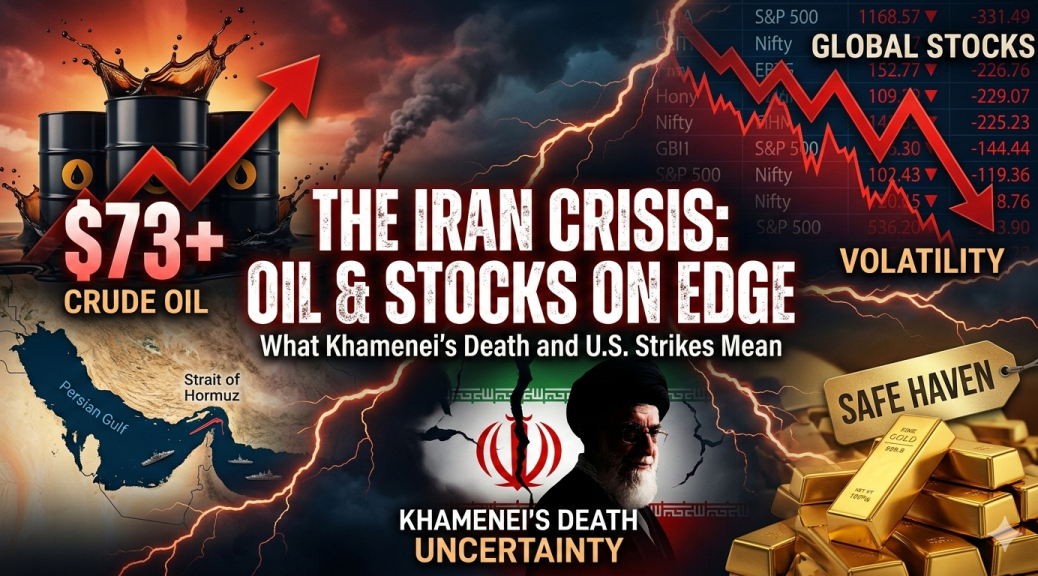
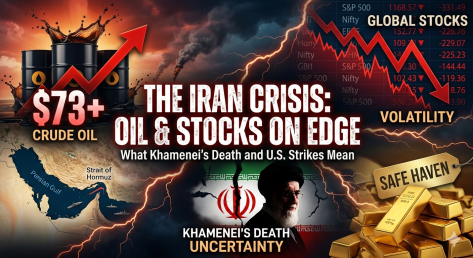
The global energy landscape and financial markets were thrown into a state of profound volatility following the events of February 28, 2026. The world woke up to a dramatically altered reality after “Operation Epic Fury”—massive, coordinated U.S. and Israeli air strikes on Iran—and the subsequent confirmation of the death of Supreme Leader Ayatollah Ali Khamenei.
For the OilfieldBusinessNetwork.com community, these events are not just headlines; they represent seismic shifts in market dynamics, security risks, and strategic planning.
🛢️ Oil Markets: Bracing for Supply Shocks
The immediate reaction in the oil markets was swift and decisive. The Middle East remains the world’s premier energy hub, and any conflict of this scale introduces a significant “risk premium.”
Price Action: Brent crude, the international benchmark, surged by over 3.4% in the initial hours following the news, trading near $73 per barrel. Market analysts, including those at Barclays, are already warning of further spikes. The immediate question is not if prices will rise, but how high. If significant supply disruptions occur, especially concerning Iranian output or exports, prices could easily test $80 and, in a prolonged worst-case scenario, approach the $140 mark.
The Hormuz Factor: The single greatest strategic threat to global oil flow is the Strait of Hormuz. Nearly one-third (31%) of the world’s seaborne crude passes through this narrow waterway. Iran has already begun its retaliatory response, launching missile strikes against U.S. bases and commercial assets in the region. Any development that closes or makes the Strait unsafe for shipping would trigger a global energy crisis. The Oilfield Business Network emphasizes that for upstream and midstream players, security in and around the Persian Gulf is now priority number one.
OPEC+ Responds: To counter this instability and potential loss of Iranian crude, Saudi Arabia is leading an emergency effort. An immediate meeting of the key “Voluntary Eight” (V8) OPEC+ members is expected today to discuss increasing production to stabilize the market.
📈 Stock Markets: The Flight to Safety
Equity markets globally have taken a bearish turn as investors grapple with the sudden geopolitical uncertainty and the immediate and long-term economic consequences.
Bearish Sentiment: Rising oil prices are often viewed as a “tax” on global economic growth, increasing inflation expectations and putting pressure on corporate margins. Major global indices, from the S&P 500 to the Nifty and Sensex, are bracing for losses. Uncertainty is the market’s greatest enemy, and the current situation in Tehran offers little clarity.
Winners and Losers:
Losers: The “OMCs” (Oil Marketing Companies), logistics firms, and airlines are facing immense selling pressure due to the dual threats of rising fuel costs and airspace closures across the Middle East.
Winners: In times of crisis, money flows to “safe havens.” Gold, U.S. Treasuries, and, unsurprisingly, the defense sector are seeing a surge in investor interest.
The Leadership Vacuum and Continued Uncertainty
The dynamic that makes this crisis unique is the death of Ayatollah Khamenei. There is no clear, undisputed successor, creating a “political risk premium” that will linger in the markets for some time. The potential for a hardline takeover by the Islamic Revolutionary Guard Corps (IRGC) or a prolonged, violent power struggle in Tehran keeps the probability of instability exceptionally high.
For the OilfieldBusinessNetwork.com community, these developments necessitate a re-evaluation of security protocols, supply chain logistics, and long-term investment strategies.
We are tracking the developing situation and its impact on the energy sector. To get updates on specific market movements, production quotas, or regional security developments, please join the discussion on our forums or contact our analysis team.






You must be logged in to post a comment.