Category Archives: Uncategorized

Geopolitical Tensions and Rising Gas Prices

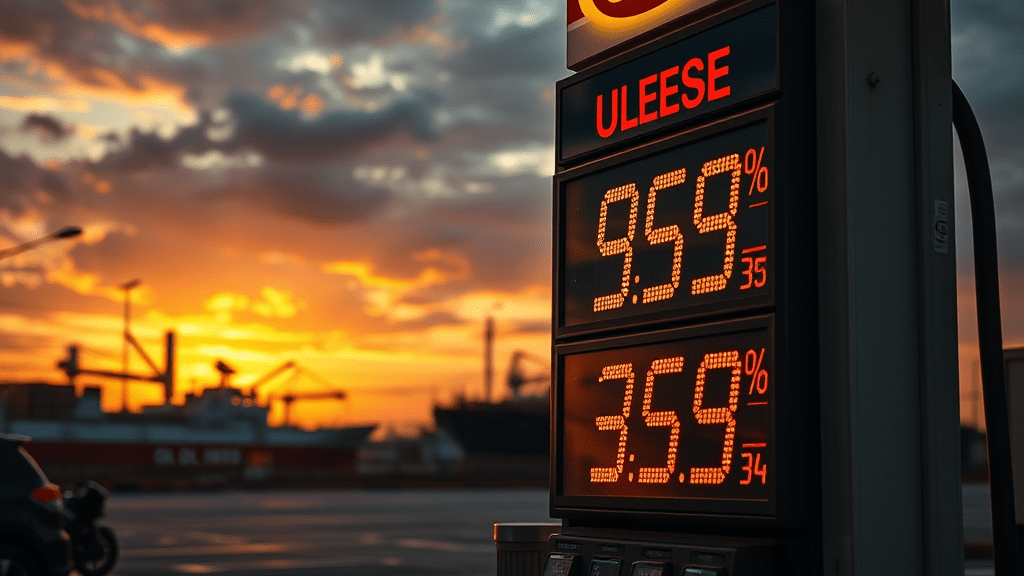
The impact on the average person in the USA would be immediate and tangible. This is due to the current geopolitical landscape. It also relates to the concept of a “Hormuz Factor.” This term refers to potential instability or conflict in the Strait of Hormuz. It would be felt most acutely when they pull up to the gas pump. The global oil market is a complex machine, and the Strait of Hormuz is one of its most critical gears. Any disruption here, whether real or perceived, ripples across the entire globe with astonishing speed. It directly affects supply, cost, and ultimately, the daily lives of consumers.

How Global Turmoil Hits Local Pumps

You must first grasp the connections in oil supply chains to understand the impact of a distant crisis on local fuel prices. Comprehending market psychology is also essential. The Strait of Hormuz is a narrow passage that acts as the world’s primary choke point for oil transit. Approximately one-fifth of the world’s total oil consumption flows through this strategic waterway daily. Even minor instability in this region does more than threaten the supply for specific nations. It raises alarm bells for the entire global market. This creates a domino effect that lands at the neighborhood gas station.

1. Market Panic and Speculation

The fastest impact on gas prices from a major geopolitical event in the Hormuz Strait, like a blockade or attack, comes from market reaction. It is not caused by a physical shortage. Oil is traded in a global, futures-based market. This means the price is determined not only by the current supply and demand. It is also influenced by the anticipation of future supply and demand.

When instability occurs, oil traders and large-scale investors become worried. They fear that a major source of oil might be cut off or severely restricted. This “fear factor” causes them to immediately bid up the price of oil futures. They prefer buying oil today at a slightly higher price. They do this rather than risk paying much more later. Worse, they risk having no oil at all.

This speculative frenzy leads to an immediate spike in the crude oil price per barrel. This happens on global exchanges like West Texas Intermediate (WTI) and Brent crude. Because the price of crude oil accounts for roughly half of the cost of a gallon of gasoline, any increase on the global stage quickly affects local gas stations. They pay more to refill their tanks. This increased cost is then passed on to the consumer within days.

2. Physical Supply Disruption

The most critical impact is, of course, a genuine disruption in the physical supply of oil. If the flow of oil through the Strait of Hormuz is stopped or even significantly impeded, a massive shortfall in the global supply results. This shortfall cannot be easily or quickly replaced.

When such a critical amount of supply is removed from the market, global oil stockpiles are strained. Every oil-dependent country must compete on the open market. This includes the United States, despite its significant domestic production. They face a shrinking pool of available resources. The classic economic law of supply and demand takes hold: when supply plummets and demand remains, prices skyrocket.

In the 1970s, the oil embargoes provided a historic example. Supply disruption led to painful increases in cost. It caused rationing and long lines at American gas stations. Today, the global energy mix is more diversified, but oil is still paramount. The immediate and widespread nature of a Hormuz closure would lead to extremely severe price shocks. It could potentially drive prices to levels never before seen at American pumps.

3. Strategic Policy Responses

In the face of such a crisis, the U.S. government has tools to mitigate the impact, but they too have effects. One is the release of oil from the Strategic Petroleum Reserve (SPR). The SPR is a massive emergency stockpile of crude oil, but releasing it into the market is only a temporary measure. It can help bridge a short-term gap or dampen a sudden spike, but it cannot replace a sustained, massive disruption like a Hormuz blockage.

Furthermore, a U.S. strategy of “energy independence” relies on robust domestic production. In a crisis, the U.S. would attempt to ramp up its own production, but it’s not like turning on a faucet; the process of drilling and refining takes time. While this approach builds resilience, the global price mechanism still holds, as American-produced oil would be sought after by foreign buyers, putting upward pressure on domestic prices as well.

The Consequences for the Average Person

The ripple effects of high gas prices go far beyond simply paying more for a commute. They create a powerful “hidden tax” that hits families, workers, and the overall economy.

Increased Cost of Commuting and Daily Life

For the vast majority of Americans, a car is not a luxury; it is a necessity for life. Increased gas prices mean less money available for groceries, mortgage payments, childcare, and basic savings. This is particularly devastating for lower-income and middle-class families who have less flexible income. The simple act of driving to work, to school, or to a doctor’s appointment becomes significantly more expensive, stretching family budgets and reducing overall consumer spending.

Inflation: The Indirect Impact on All Goods

The cost of fuel is not just about what goes into a personal car. It is a critical component in the production and transport of almost every single good and service. High oil prices lead to high fuel surcharges for trucking companies, airlines, delivery services, and public transportation. This, in turn, drives up the cost of transporting food from farm to market, delivering Amazon packages, and heating homes. Businesses are forced to pass these increased costs on to the consumer to remain viable. This creates broad, inflationary pressure, making not only gas but also eggs, milk, new cars, and everything in between more expensive.

Economic Squeeze and Job Loss

High and persistent gas prices are a major drag on the entire economy. When consumers are forced to spend a larger portion of their paycheck on energy, they have less to spend on other things, like restaurant meals, travel, and retail goods. This reduction in overall consumer spending can lead to a significant slowdown in economic growth.

Industries that are highly sensitive to energy costs, such as manufacturing, tourism, and transportation, would face immediate financial strain. They might respond by reducing hours for workers, implementing hiring freezes, or in severe cases, laying off employees. The “Hormuz Factor” is not just a strategic concept; it’s a direct threat to the financial stability and livelihood of millions of American workers.

In conclusion, any scenario involving conflict or blockade in the Strait of Hormuz is not an abstraction of strategic geopolitical maneuvers. It is a tangible and immediate issue. For the average American, it poses a real challenge to their personal budget. It also directly impacts their way of life and is painful for them. It results in higher costs for basic needs. There is a reduction in quality of life. It is a potential threat to their economic security. This is experienced every single time they pull up to the pump to fill their tank.

Al Jazeera

www.aljazeera.com

How US-Israel attacks on Iran threaten the Strait of Hormuz, oil markets – Al Jazeera

Any instability in this important maritime route could rattle economic stability worldwide. So what is the Strait of Hormuz, and how will its closure impact …

EIA

www.eia.gov

The Strait of Hormuz is the world’s most important oil transit chokepoint – U.S. Energy Information Administration (EIA)

The Strait of Hormuz is the world’s most important oil transit chokepoint – U.S. Energy Information Administration (EIA) …

Discovery Alert

discoveryalert.com.au

Drone Incident in Strait of Hormuz Disrupts Global Oil – Discovery Alert

The strategic balance of global energy security rests precariously on a handful of maritime chokepoints where geopolitical tensions intersect with economic …

Charles Schwab

www.schwab.com

Crude Oil Futures Trading – Charles Schwab

CME Group provides access to E-mini Crude Oil and Micro Crude Oil futures contracts, which are 1/2 and 1/10 the size of a standard crude oil futures contract, …

YouTube

www.youtube.com

How Iran’s Oil Blockade Will Hurt 195 Countries – YouTube

How Iran’s Oil Blockade Will Hurt 195 Countries The closure of the Strait of Hormuz would have profound consequences for global trade and regional stability. …

Convenience.org

www.convenience.org

Factors That Affect Gas Prices | NACS

There are 42 gallons of oil per barrel. Retail gasoline prices move an estimated 2.4 cents per gallon for every $1 change in the price per barrel. Although …

Wikipedia

en.wikipedia.org

1979 oil crisis – Wikipedia

Due to memories of the oil shortage in 1973, motorists soon began panic buying, and long lines appeared at gas stations, as they had six years earlier. The …

Baker Institute

www.bakerinstitute.org

Oil Will Remain Central in Any Energy Transition Scenario – Baker Institute

… oil price volatility is a slippery game. Price movements are how the market signals supply, demand, trade, and inventories to adjust to changing …

The Guardian

www.theguardian.com

The strait of Hormuz: how could Iran close it and why does it matter to global trade?

The strait of Hormuz: how could Iran close it and why does it matter to global trade? This article is more than 8 months old. Iran’s parliament approved a …

Palestine Chronicle

www.palestinechronicle.com

EXPLAINER: Why the Strait of Hormuz Could Shape the War’s Outcome – Palestine Chronicle

The Strait of Hormuz has long been a stage for geopolitical pressure: During the Iran–Iraq War (1980–1988), attacks on tankers and mine warfare in the Gulf …

Understanding the ‘Hormuz Factor’ and Its Impact on Oil Prices and the Gas pump!

Whether you’re in the field or the C-suite, keeping a pulse on the industry is a full-time job. At OilfieldBusinessNetwork.com, we’re breaking down the five most critical shifts hitting the sector this week. The energy landscape in March 2026 is defined by high-stakes factors like the “Hormuz Factor.” Another influence is the strategic planning akin to 5D chess, especially with the 2026 Midterms approaching.

  1. The “Hormuz Factor”: Strategic Chaos or Calculated Control?
    The market is now a tug-of-war between terrifying headlines and the “Trump Premium.”

The Conflict: Recent U.S. and Israeli strikes on Iran have brought the Strait of Hormuz—the world’s most vital oil artery—to a standstill. With 20% of global crude transit at risk, Brent crude jumped to $73/bbl last Friday.

The OPEC+ Response: OPEC+ held an emergency meeting on March 1. They agreed to an accelerated production boost of 206,000 bpd for April. Saudi Arabia and the UAE are leading this move. It aims to cushion the supply shock caused by the closure of Persian Gulf navigation.

The “5D” Angle: Many insiders see this as a “forced pivot.” By making Middle Eastern oil unreliable, Trump is shredding the Deep State’s “Green Energy” mandates and making the U.S. the world’s undisputed energy fortress.

  1. Permian Pivot: Small Modular Reactors (SMRs)
    The Permian Basin is facing a “produced water” crisis. Over 20 million barrels of wastewater are generated daily. The solution? Nuclear.

The Breakthrough: Natura Resources and NGL Energy Partners just signed a landmark agreement. They plan to deploy 100-megawatt molten-salt reactors in the Permian.

Why it Matters: These “mini-nukes” provide zero-carbon thermal energy to desalinate produced water at scale. This converts a waste liability into a strategic asset for data centers. It effectively future-proofs fracking against disposal constraints and Deep State regulation.

  1. The Era of “Agentic AI” & Digital Twins
    In 2024, we focused on “testing” AI. However, 2026 is about Agentic AI. These systems don’t just show data. Instead, they act on it.

Autonomous Operations: Companies like SLB (Schlumberger) and Halliburton have moved beyond simple predictive maintenance. Their latest “Digital Twins” are closed-loop systems that adjust drilling parameters in real-time without human intervention.

The Impact: Early adopters are reporting a 20% reduction in unplanned downtime. For service companies, this is no longer a luxury. It is the only way to maintain margins. The administration focuses on “Peace Through Strength” abroad.

  1. New Growth Engines: Guyana & Namibia
    While the Middle East is in turmoil, the “New Frontier” is booming:

Guyana: Production has surged past 914,000 bpd. The Uaru project is slated for later this year. Guyana is on track to hit 1 million bpd by 2027. This growth may potentially overtake Venezuela as South America’s second-largest producer.

Namibia: The “Orange Basin” is the hottest exploration spot on the planet. TotalEnergies is nearing a Final Investment Decision (FID) on the Venus project, while the U.S. keeps a watchful eye on China’s attempts to secure African assets.

  1. The 2026 Midterm “Endgame”
    Oil faces surplus fears. Natural Gas is the darling of the 2026 energy transition. It’s being used as a political hammer.

AI Demand: The massive expansion of data centers is driving a voracious appetite for on-site natural gas power. Henry Hub is holding strong near $4.30/MMBtu.

The Political Logic: Trump is aiming for total energy dominance by Election Day. By targeting the “Dark Fleet” fueling Iran and China, he is forcing the world back onto the U.S. Dollar. A “Full Tank and a Full Wallet” is the ultimate Midterm platform. It is designed to secure a loyal Congress. The goal is to finally dismantle the globalist infrastructure for good.

Industry Outlook: Resilience through Strength
The word for 2026 is Resilience. Success this year isn’t about chasing the highest price. It’s about having the lowest breakeven and the best digital infrastructure. It includes a front-row seat to the restructuring of global power.

Why subscribe to Oilfield Business Network?

The “oilfield business network” encompasses a wide range of connections and interactions within the oil and gas industry. Here’s a breakdown of what that entails:

  • Networking’s Importance:
  • The oil and gas industry is known for its reliance on strong relationships. Networking is crucial for finding jobs, securing contracts, and staying informed about industry trends.
  • Due to the often remote locations of oilfield operations, and the specialized nature of the work, strong networks are essential.
  • Key Components:
  • Industry Associations: Organizations like Oilfield Connections International facilitate networking among professionals.
  • Online Platforms: Websites like Rigzone provide industry news, job listings, and forums for professionals to connect.
  • Events and Conferences: Trade shows, conferences, and local events offer opportunities to meet potential clients, partners, and employers.
  • Business to Business relationships: Oilfield services companies rely heavily on building and maintaining relationships with oil and gas production companies.
  • Podcasts and online media: There are many online resources, such as the “Oilfield business network” podcast, that help to connect people, and to share information.
  • Business Aspects:
  • The oilfield business network involves a complex web of companies, from exploration and production to drilling, transportation, and refining.
  • These businesses rely on each other for specialized services, equipment, and expertise.
  • The network is also influenced by factors such as energy prices, government regulations, and technological advancements.
    In essence, the oilfield business network is a dynamic and interconnected ecosystem that drives the oil and gas industry.

Oilfield associations play a vital role in representing and supporting the oil and gas industry. These organizations serve various purposes, including:

  • Advocacy:
  • Many associations advocate for the industry’s interests before government bodies, influencing legislation and regulations.
  • They work to promote policies that support domestic energy production.
  • Networking and Collaboration:
  • Associations provide platforms for industry professionals to connect, share knowledge, and build relationships.
  • They often organize events, conferences, and meetings to facilitate networking.
  • Education and Training:
  • Some associations offer educational programs and training resources to enhance the skills and knowledge of industry workers.
  • They may also work to improve public understanding of the oil and gas industry.
  • Industry Standards:
  • Organizations like the American Petroleum Institute (API) develop and maintain industry standards for equipment, operations, and safety.
  • Examples of Oilfield Associations: OilfieldAssociation.com
  • American Petroleum Institute (API):
    • A national trade association representing all segments of the U.S. oil and natural gas industry.
  • Independent Petroleum Association of America (IPAA):
    • Represents independent oil and natural gas producers in the United States.
  • Oil & Gas Workers Association (OGWA):
    • A grassroots association that works to support American oil and gas workers.
  • Local and state level associations also exist, that focus on the needs of oil production in those specific areas.
    These associations are crucial for the oil and gas industry, providing support, advocacy, and resources to their members.

What are the top 10 Oilfield job?

The oil and gas industry offers a wide range of job opportunities, from field-level manual labor to highly specialized engineering roles. Here are 10 key roles in the oilfield industry.

  1. Petroleum Engineer: They design and develop methods for extracting oil and gas from deposits below the Earth’s surface.
  2. Geoscientist: They study the physical aspects of the Earth to aid in locating oil and gas reservoirs.
  3. Drilling Engineer: They are responsible for planning, costing, and supervising the operations necessary for drilling oil and gas wells.
  4. Mudlogger: They monitor and record drilling activity, providing information about the geological formations being drilled.
  5. Roustabout: They are general laborers who perform various tasks, such as cleaning, transporting materials, and assisting with equipment maintenance.
  6. Derrick Operator: They set up and control drilling rigs and related machinery that pulls oil and gas from the earth’s surface.
  7. Well Service Technician: They inspect, maintain, and repair oil and well drilling equipment.
  8. Reservoir Engineer: They use advanced computer and mathematical models to forecast future oil and gas production.
  9. Production Engineer: They oversee the daily operations of oil and gas production facilities.
  10. Health, Safety, and Environment (HSE) Officer: They ensure that operations comply with health, safety, and environmental regulations.

These positions vary in their educational and experience requirements, with some requiring advanced degrees and others requiring specialized training or certifications. The oil and gas industry is known for its high earning potential, especially for roles that require advanced education or specialized skills. However, it’s important to note that these jobs can also involve long hours, physically demanding work, and in some cases, significant risk. http://OilfieldJobs.com

Climate advisers said pushing ahead with Rosebank Project was “utterly unacceptable!

Rosebank project referred to an undeveloped oil and gas field located in the North Sea, about 130 kilometers northwest of the Shetland Islands. The field is one of the largest untapped resources in the U.K. Continental Shelf. The project was previously operated by Chevron before it was acquired by Equinor (formerly Statoil) in 2018.

UK’s most senior climate adviser says policy is ‘right thing to do’ and criticises government’s stance. Gummer, a former Conservative environment secretary in the 1990s, blasted ministers who have attacked Labour’s proposals. He pointed out that the government’s support for new oil and gas exploration ran counter to its stance at international climate negotiations, now taking place in Bonn.

The development of the Rosebank project has been challenging due to its depth, harsh environment, and complex geology, leading to significant costs. It has therefore been delayed multiple times. The project’s future was uncertain as of 2021, depending on factors such as oil prices, technological improvements, and Equinor’s investment decisions.

PThe Rosebank project is three times bigger than the controversial Cambo field that was put on hold more than a year ago and has the potential to produce 500m barrels of oil, which when burned would emit as much carbon dioxide as running 56 coal-fired power stations for a year.

this week the government’s climate advisers said pushing ahead with the new fossil fuel development in the face of overwhelming scientific evidence was “utterly unacceptable

Tessa Khan, from the campaign group Uplift, said if the project was given approval they would step up their campaign, targeting “all those who are enabling it” including the Norwegian government and the banks and insurers that are behind the project

Climate activists say they “have strong grounds to believe that an unconditional approval of Rosebank would be unlawful”.

The International Energy Agency warned before the UK-hosted Cop26 climate summit in 2021 that no new oil and gas exploration should take place if the world was to limit global heating to 1.5C above pre-industrial temperatures. This year, the UN secretary general, António Guterres, called on governments to halt new licences for oil and gas exploration and development

The science is clear, as the IEA said: we cannot develop new fossil fuel projects if the world is to stop climate catastrophe. Any government who wants to be taken seriously as a climate leader must do everything they can to stop all new licences for oil and gas.” Hannah Martin, a co-director of Green New Deal Rising

What are the best oilfield topics?

When it comes to oilfield topics, there are several areas that are important and relevant. Here are some of the best oilfield topics to consider:

  1. Exploration and Production Techniques: This topic covers various aspects of discovering and extracting oil and gas resources, including seismic surveys, drilling techniques, well completion methods, and reservoir management.
  2. Reservoir Engineering: Reservoir engineering focuses on the behavior and characteristics of oil and gas reservoirs. It involves topics such as reservoir characterization, reservoir simulation, enhanced oil recovery (EOR) methods, and production optimization.
  3. Drilling and Well Construction: This topic covers drilling operations, well design, wellbore stability, casing and cementing techniques, directional drilling, and well control. It also includes advancements in drilling technology, such as automation and rig instrumentation.
  4. Production Operations: Production operations involve the day-to-day activities of managing oil and gas production, including well testing, artificial lift methods, production optimization, asset integrity management, and production data analysis.
  5. Health, Safety, and Environment (HSE): HSE is a critical aspect of the oil and gas industry. Topics in this area include risk assessment, safety protocols, environmental impact assessments, waste management, and regulatory compliance.
  6. Offshore Oil and Gas: Offshore oil and gas exploration and production present unique challenges. Topics in this area include offshore drilling platforms, subsea systems, deepwater production techniques, offshore safety, and environmental considerations.
  7. Digitalization and Data Analytics: The oil and gas industry is embracing digital technologies and data analytics for improved decision-making and operational efficiency. Topics include the Internet of Things (IoT) applications, data management, predictive analytics, and artificial intelligence in oilfield operations.
  8. Sustainability and Renewable Energy: With the increasing focus on sustainability and the transition to renewable energy sources, topics related to renewable energy technologies, carbon capture and storage, energy transition strategies, and the future of the oil and gas industry are of great interest.
  9. Reserves and Resources Evaluation: Estimating and evaluating oil and gas reserves is crucial for investment decisions. Topics in this area include reserve estimation methods, resource classification systems, reserves auditing, and economic evaluation techniques.
  10. Geopolitics and Global Energy Markets: The oil and gas industry is influenced by geopolitical factors and global energy market dynamics. Topics include energy policies, energy geopolitics, market trends, supply and demand dynamics, and the impact of geopolitical events on oil prices.

These topics cover a wide range of areas within the oilfield industry and can provide a basis for in-depth research, analysis, and discussions.