
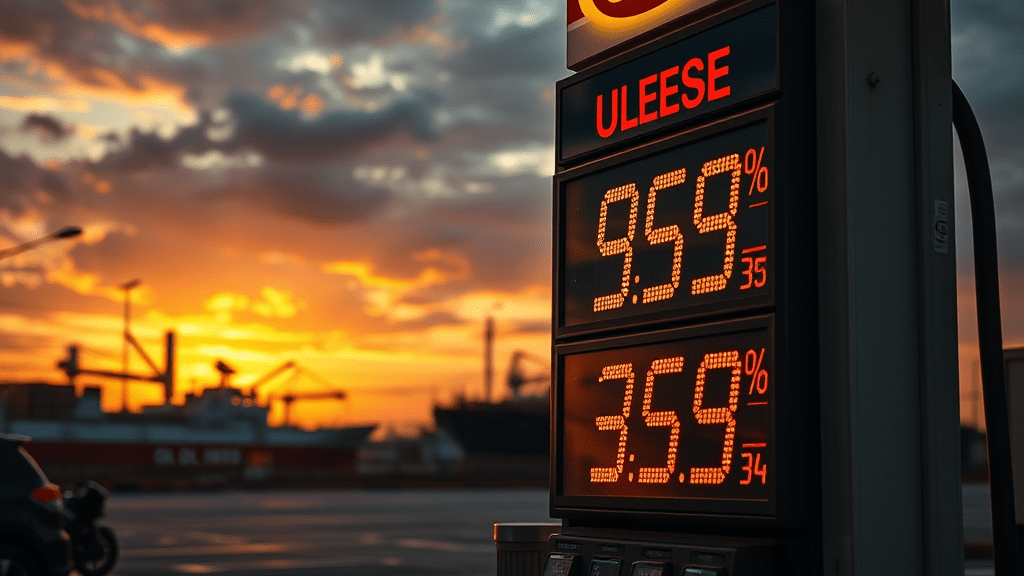
The impact on the average person in the USA would be immediate and tangible. This is due to the current geopolitical landscape. It also relates to the concept of a “Hormuz Factor.” This term refers to potential instability or conflict in the Strait of Hormuz. It would be felt most acutely when they pull up to the gas pump. The global oil market is a complex machine, and the Strait of Hormuz is one of its most critical gears. Any disruption here, whether real or perceived, ripples across the entire globe with astonishing speed. It directly affects supply, cost, and ultimately, the daily lives of consumers.
How Global Turmoil Hits Local Pumps
You must first grasp the connections in oil supply chains to understand the impact of a distant crisis on local fuel prices. Comprehending market psychology is also essential. The Strait of Hormuz is a narrow passage that acts as the world’s primary choke point for oil transit. Approximately one-fifth of the world’s total oil consumption flows through this strategic waterway daily. Even minor instability in this region does more than threaten the supply for specific nations. It raises alarm bells for the entire global market. This creates a domino effect that lands at the neighborhood gas station.
1. Market Panic and Speculation
The fastest impact on gas prices from a major geopolitical event in the Hormuz Strait, like a blockade or attack, comes from market reaction. It is not caused by a physical shortage. Oil is traded in a global, futures-based market. This means the price is determined not only by the current supply and demand. It is also influenced by the anticipation of future supply and demand.
When instability occurs, oil traders and large-scale investors become worried. They fear that a major source of oil might be cut off or severely restricted. This “fear factor” causes them to immediately bid up the price of oil futures. They prefer buying oil today at a slightly higher price. They do this rather than risk paying much more later. Worse, they risk having no oil at all.
This speculative frenzy leads to an immediate spike in the crude oil price per barrel. This happens on global exchanges like West Texas Intermediate (WTI) and Brent crude. Because the price of crude oil accounts for roughly half of the cost of a gallon of gasoline, any increase on the global stage quickly affects local gas stations. They pay more to refill their tanks. This increased cost is then passed on to the consumer within days.
2. Physical Supply Disruption
The most critical impact is, of course, a genuine disruption in the physical supply of oil. If the flow of oil through the Strait of Hormuz is stopped or even significantly impeded, a massive shortfall in the global supply results. This shortfall cannot be easily or quickly replaced.
When such a critical amount of supply is removed from the market, global oil stockpiles are strained. Every oil-dependent country must compete on the open market. This includes the United States, despite its significant domestic production. They face a shrinking pool of available resources. The classic economic law of supply and demand takes hold: when supply plummets and demand remains, prices skyrocket.
In the 1970s, the oil embargoes provided a historic example. Supply disruption led to painful increases in cost. It caused rationing and long lines at American gas stations. Today, the global energy mix is more diversified, but oil is still paramount. The immediate and widespread nature of a Hormuz closure would lead to extremely severe price shocks. It could potentially drive prices to levels never before seen at American pumps.
3. Strategic Policy Responses
In the face of such a crisis, the U.S. government has tools to mitigate the impact, but they too have effects. One is the release of oil from the Strategic Petroleum Reserve (SPR). The SPR is a massive emergency stockpile of crude oil, but releasing it into the market is only a temporary measure. It can help bridge a short-term gap or dampen a sudden spike, but it cannot replace a sustained, massive disruption like a Hormuz blockage.
Furthermore, a U.S. strategy of “energy independence” relies on robust domestic production. In a crisis, the U.S. would attempt to ramp up its own production, but it’s not like turning on a faucet; the process of drilling and refining takes time. While this approach builds resilience, the global price mechanism still holds, as American-produced oil would be sought after by foreign buyers, putting upward pressure on domestic prices as well.
The Consequences for the Average Person
The ripple effects of high gas prices go far beyond simply paying more for a commute. They create a powerful “hidden tax” that hits families, workers, and the overall economy.
Increased Cost of Commuting and Daily Life
For the vast majority of Americans, a car is not a luxury; it is a necessity for life. Increased gas prices mean less money available for groceries, mortgage payments, childcare, and basic savings. This is particularly devastating for lower-income and middle-class families who have less flexible income. The simple act of driving to work, to school, or to a doctor’s appointment becomes significantly more expensive, stretching family budgets and reducing overall consumer spending.
Inflation: The Indirect Impact on All Goods
The cost of fuel is not just about what goes into a personal car. It is a critical component in the production and transport of almost every single good and service. High oil prices lead to high fuel surcharges for trucking companies, airlines, delivery services, and public transportation. This, in turn, drives up the cost of transporting food from farm to market, delivering Amazon packages, and heating homes. Businesses are forced to pass these increased costs on to the consumer to remain viable. This creates broad, inflationary pressure, making not only gas but also eggs, milk, new cars, and everything in between more expensive.
Economic Squeeze and Job Loss
High and persistent gas prices are a major drag on the entire economy. When consumers are forced to spend a larger portion of their paycheck on energy, they have less to spend on other things, like restaurant meals, travel, and retail goods. This reduction in overall consumer spending can lead to a significant slowdown in economic growth.
Industries that are highly sensitive to energy costs, such as manufacturing, tourism, and transportation, would face immediate financial strain. They might respond by reducing hours for workers, implementing hiring freezes, or in severe cases, laying off employees. The “Hormuz Factor” is not just a strategic concept; it’s a direct threat to the financial stability and livelihood of millions of American workers.
In conclusion, any scenario involving conflict or blockade in the Strait of Hormuz is not an abstraction of strategic geopolitical maneuvers. It is a tangible and immediate issue. For the average American, it poses a real challenge to their personal budget. It also directly impacts their way of life and is painful for them. It results in higher costs for basic needs. There is a reduction in quality of life. It is a potential threat to their economic security. This is experienced every single time they pull up to the pump to fill their tank.
How US-Israel attacks on Iran threaten the Strait of Hormuz, oil markets – Al Jazeera
Drone Incident in Strait of Hormuz Disrupts Global Oil – Discovery Alert
Crude Oil Futures Trading – Charles Schwab
How Iran’s Oil Blockade Will Hurt 195 Countries – YouTube
Factors That Affect Gas Prices | NACS
Oil Will Remain Central in Any Energy Transition Scenario – Baker Institute
The strait of Hormuz: how could Iran close it and why does it matter to global trade?
EXPLAINER: Why the Strait of Hormuz Could Shape the War’s Outcome – Palestine Chronicle
 Oilfield Business Network & Oilfield Association